Meaningful Summer Experiences to Aid Transition
by
Ernst VanBergeijk  Print This Article
Meaningful Summer Experiences to Aid Transition
For parents of elementary school children the transition to post-secondary education can seem a million miles away. However, the skills children learn at a variety of summer programs can be instrumental in helping them transition not only to college, but also beyond college to the world of work and independent living. Parents of children with a variety of disabilities have to be even more mindful of this fact because some of our children do not learn skills in the same fashion as other children and cannot learn simply through observation. Selecting a summer program depends upon the developmental level of the child, the skills that a parent hopes the child will learn, and the family’s budget.
Pre-school and early elementary school children should have, as a goal, the ability to separate from their parents for short periods of time. At this stage of development, parents should identify programs that allow the child to experience independence while learning a new skill. Depending upon the age, attention span, and anxiety level of the child, these programs can last from 30 minutes to an entire morning or afternoon. Local libraries, museums, parks and recreation departments, and religious groups are excellent organizations to explore for the availability of programming to suit a child with and without a disability.
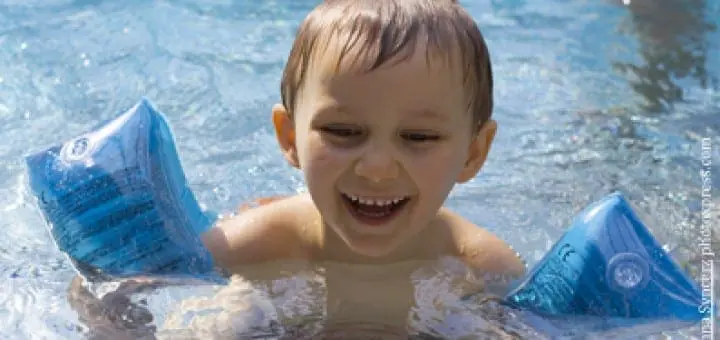
Deciding what skills a child will helpfully learn from a summer experience will help guide the selection process. Is the goal for the child to learn social skills? Reading skills? Or, some sort of physical skill? (e.g. playing baseball, riding a bike, etc.) A critical skill that children should learn is swimming. For children on the autism spectrum one of the leading causes of death after seizures is accidents. One of the most frequent accidents is drowning. The American Red Cross offers swimming lessons at local community pools that cater to a wide range of ability levels. Some courses are specifically geared toward individuals with disabilities known as adapted aquatics or adapted swimming lessons. Check with your local Red Cross Chapter for a swimming program near you (https://www.redcross.org/).
Once the child successfully separates from the parents for lessons, an intermediate step is to try a day-camp so that the child experiences independence from parents for a longer period of time. The day-camp is an opportunity for the child to develop friendships, pursue new interests, and even try new foods. Day –camps for early elementary age children are a nice segueinto the notion of attending a sleep away camp. Sleep away camps come in a variety of themes and are located in a myriad of settings. There are band, art, theater, foreign language, adventure, surfing, robotics, computer, and even scuba camps. The American Camping Association (https://www.acacamps.org/) can help you locate a camp in your area that suits your child’s interest. Resources for Children with Special Needs (https://www.includenyc.org/resources) publishes an annual directory of summer camps and programs that serve children with disabilities and specifies what type of disability each camp serves. Some camps and some municipalities offer scholarships to camps (e.g. New York’s Fresh Air Fund, www.freshair.org/) to families who cannot afford a sleep way summer camp experience for their children.
Summer camp helps the child prepare to go away to college by allowing them to problem solve and care for themselves without the reminders from parents. They have to get themselves up in the morning, get dressed, and take care of their personal hygiene. As the child matures and reaches junior high or high school age, other summer possibilities open up to them. Some colleges offer summer preview programs where junior high and high school students are able to live on a college campus and even take a course for college credit. Musiker Discovery programs (https://www.summerdiscovery.com/) operate summer programs for students at campuses across the U.S. and in other countries as well. These programs are for general education students and can be a good litmus test for parents and the high school student with disabilities as to whether or not the student is ready to leave home and go to college.
An emerging model of higher education is called a Comprehensive Transition and Post-secondary (CTP) Program. CTPs are U.S. Department of Education approved programs that have a specialized curriculum and advisory structure specifically designed for students with intellectual disabilities. Some of these CTP programs also have summer transition programs. The students live on a college campus, sleep in the dorms and eat in the cafeteria to see if going away to college is something they can handle and enjoy doing. Unlike other types of summer or tradition college programs, some of the curriculum will be devoted to independent living skills like laundry, budgeting, banking, and checking, and even travel training. For an updated listing of U.S. Department of Education approved Comprehensive Transition and Postsecondary (CTP) programs please visit: https://studentaid.gov/understand-aid/eligibility/requirements/intellectual-disabilities
This list of approved programs is updated on a monthly basis.
To prepare a child for the transition to the college, and eventually the world of work and independent living, parents of special needs children must envision what their young child will need to learn in terms of independent living skills. A parent must work backward from this vision and identify the building blocks of some very complex skills. Meaningful summer experiences can help put those critical building blocks to independence in place. Students must learn to separate from parents, wake up by themselves, and advocate for themselves as essential skills in making the transition to postsecondary education successful.
Helpful Articles
- Planning for Your Special Child’s Future: It’s Never “Too Early” to Start!
- Educational Options After High School for Students with Special Needs
- College Programs: Closer Than You Think
- Think Camp Yes, You Can Send Your Child to Camp
- Where to Go if Your Child Needs a Job or Help with Post High School Education
- What Are Pre-Employment Skills and How Does My Child Get Them?
- Transition & Supported Employment Working for You
- When Is the Right Time to Transition from Your Home to a Group Home?
- Preparing for the First Apartment: Beyond Home Furnishings and Domestic Supplies
- Apps for Supporting Independence: The Transition to Adulthood